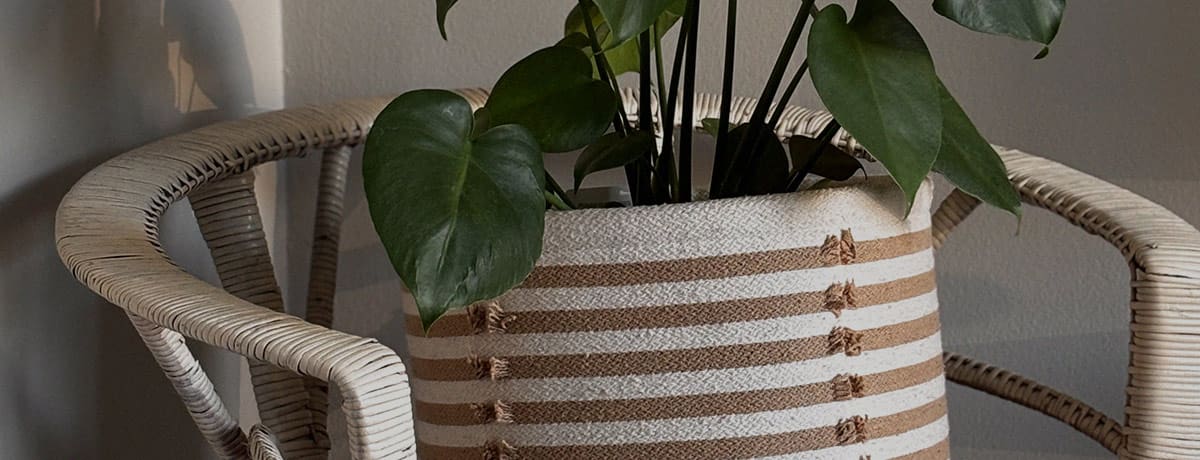
What happens when we design around how a space makes us feel?
I’ve been thinking about the relationship between design, comfort, memory, and the body.
It started with something relatively simple.
I’ve been making my home feel more like me.
Not necessarily by buying more things, but by becoming more intentional about what I surround myself with: the objects I keep, the textures I introduce, the light I live in, the places things sit, the colours I respond to, and the small details that make the space feel familiar.
And somewhere along the way, I noticed something happening.
I was becoming more connected to my environment.
My house started feeling less like a place I was living in and more like a place that belonged to me.
It began to feel like home.
I felt more grounded there.
More comfortable.
More settled.
More like myself.
And naturally, my brain did what it tends to do:
Why?
What is actually happening when a space makes us feel comfortable?
We usually talk about design through what we can see.
Colour.
Form.
Proportion.
Material.
Lighting.
Furniture.
Composition.
We talk about whether something is beautiful, functional, balanced, timeless or on trend.
But there is another layer underneath all of that.
The person experiencing it.
A room doesn’t exist in isolation.
It is experienced by a human body carrying years of memories, associations, preferences, experiences and expectations.
The same chair can feel completely different to two people.
The same smell can make one person feel at home and another want to leave.
A particular kind of light might make someone feel calm, while someone else finds it cold.
A worn wooden table might feel comforting because it reminds someone of their childhood.
A certain room might feel immediately familiar even though you’ve never been there before.
So I started wondering:
What if comfort isn’t only something we design visually?
What if it’s something we can design for experientially?
The brain is constantly making associations.
This is where my curiosity started moving toward neuroscience and psychology.
Our brains don’t simply receive sensory information and file it away.
They interpret it.
They compare it with what we’ve experienced before.
They create associations.
A smell can become connected to a memory.
A sound can become connected to a place.
A texture can become connected to familiarity.
A particular environment can become associated with safety, relaxation, excitement, nostalgia or even stress.
Over time, these associations can become incredibly personal.
Which makes me think differently about the objects and environments we design.
Maybe a home isn’t just a collection of things.
Maybe it’s a collection of cues.
Cues that tell us:
You know this place.
You belong here.
You can relax here.
This feels like you.
So what actually makes a space feel like home?
I don’t think there is one answer.
And that’s what makes this interesting.
We could start with the senses.
Sight.
How does light change our perception of a room?
Why can warm, low lighting feel intimate while bright, even lighting can feel energizing or functional?
Touch.
Why do certain materials immediately communicate softness, warmth, weight, age or quality?
Why does touching something sometimes create a completely different response than simply looking at it?
Smell.
Why can a scent transport us somewhere almost instantly?
Why can one smell remind you of a person, a season, a childhood home or a specific moment?
Sound.
What happens when a space is quiet?
What happens when there is background noise, music, conversation or the sound of movement?
Space itself.
Why does one room make you want to stay while another makes you want to leave?
Why does a high ceiling feel different from a low one?
Why does a room with somewhere comfortable to retreat feel different from one that is completely open?
And then there is something even more personal:
memory.
We don’t all experience the same space.
This might be one of the most important things I’ve been thinking about.
There is no universal definition of a comforting environment.
Because comfort is partly personal.
The things we experience throughout our lives become part of how we interpret the world around us.
A particular colour might remind you of your grandmother’s kitchen.
A certain fabric might remind you of an old sofa.
The smell of coffee might remind you of a relationship.
A window overlooking trees might make you feel peaceful because you’ve always associated nature with escape.
Someone else can walk into exactly the same room and feel nothing.
Or feel something completely different.
So perhaps designing a space isn’t simply about determining:
What looks good?
Maybe we should also be asking:
What does this mean to the person who will experience it?
From aesthetic to emotional.
This is where I’m becoming particularly interested in the idea of designing for feeling.
Not designing a room and then asking someone how they feel about it.
But beginning with the feeling.
How do we want this space to feel?
Safe?
Restful?
Energizing?
Grounding?
Playful?
Sensual?
Focused?
Connected?
Then working backwards.
What sensory conditions could support that experience?
What materials?
What lighting?
What sounds?
What textures?
What spatial relationships?
What objects?
What memories?
What rituals?
What does the person already associate with that feeling?
And perhaps most importantly:
What should we leave out?
Because sometimes creating comfort isn’t about adding another beautiful thing.
It’s about removing what is creating friction.
Design to Heal
I’m intentionally cautious with this phrase.
I don’t mean that interior design can cure illness or replace medical care.
I mean something more subtle.
Can our environments support us?
Can a space help us rest?
Can it reduce unnecessary sensory friction?
Can it make everyday rituals easier?
Can it give us a feeling of familiarity?
Can it create opportunities for connection or solitude?
Can it remind us who we are?
Can it help us feel more at home in our own lives?
These are questions I want to explore rather than pretend I already know the answers to.
And that’s where this idea begins for me.
Not as a formula.
Not as a set of rules.
But as a research question.
Designing from the person outward.
The more I think about it, the more I question the traditional order of designing a space.
We often start with:
What do we want the room to look like?
I’m becoming more interested in starting with:
Who is experiencing this room?
What do they need?
What do they remember?
What makes them feel safe?
What makes them feel alive?
What sensory experiences do they respond to?
What do they want to do here?
How do they want to feel when they wake up, come home, rest, work, gather, create or leave?
Then aesthetics become part of the answer.
Not the entire question.
Maybe this is what I mean by designing to feel.
I’m interested in the space between what we see and what we experience.
Between an object and the memory attached to it.
Between a room and the person occupying it.
Between aesthetics and emotion.
Between the physical environment and the internal experience.
I don’t have a complete theory yet.
I’m starting with an observation:
Our environments become part of our experience of being alive.
And I’m curious about what happens when we design with that in mind.
So this is the beginning of a new question I’m following through Only Else:
Can we design spaces that don’t just look good to us, but feel like us?

Founder of Only Else | Holistic Designer Creating brands, spaces & experiences built to be felt.

Be the first to comment